The Dilemma of Existential Threat: Understanding the Resurgence of Conflict in Tribal Areas through the Lens of Ontological Insecurities
DOI:
https://doi.org/10.68024/712n9x48Keywords:
Ontological security, TTP, Pakistan, Tribal areas, Pashtunwali, Identity, Conflict resolutionAbstract
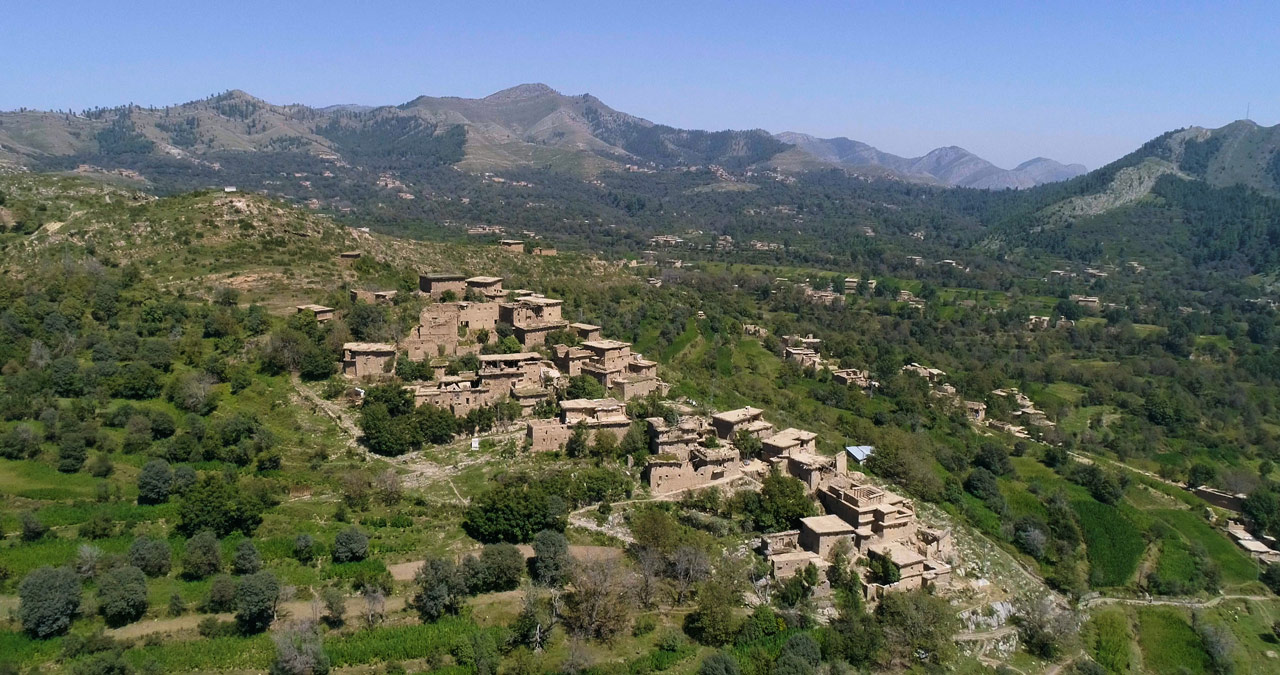
The re-emergence of conflict in Pakistan's tribal areas bordering Afghanistan has generated intense debate among academics. While existing research links the conflict to Afghanistan's situation, this study offers a distinct perspective, examining the conflict through the lens of ontological insecurities. In the context of ontological security, ideology, biographical narrative, and self-identity are interconnected elements that contribute to an individual's sense of stability and continuity. Ontological security, thus, is primarily concerned with the repercussions of anxieties and existential threats, and with how individuals and collective actors make sense of their lives. It plays a vital role in maintaining a stable sense of self. This research takes conflict in the tribal areas as a case study to examine how ontological insecurities function as nodes of instability between militants and the state of Pakistan, insecurities that not only perpetuate conflict but also sabotage peace efforts in the region. This study brings the concept of ontological insecurity into the analysis of the border conflict and, in doing so, enriches the existing body of knowledge.
Downloads
References
Abbas, H. (2014). The Taliban revival: Violence and extremism on the Pakistan-Afghanistan frontier. Yale University Press.
Ahmed, A. (2013). The thistle and the drone: How America’s war on terror became a global war on tribal Islam. Brookings Institution Press.
Ali, G., Ansari, M. I., & Firdous, M. (2020). FATA merger to Khyber Pakhtunkhwa: Problems and prospects for federalism in Pakistan. Global Political Review, 5(1), 224–233. https://doi.org/10.31703/gpr.2020(V-I).25 DOI: https://doi.org/10.31703/gpr.2020(V-I).25
Ali, M. (2026, April 4). [Personal communication via interview].
Banerjee, S. (2025, January 21). The resurgence of the Pakistani Taliban – Implications for Afghanistan-Pakistan relations. PRIF Blog. https://blog.prif.org/2025/01/21/the-resurgence-of-the-pakistani-taliban-implications-for-afghanistan-pakistan-relations/
Barfield, T. (2010). Afghanistan: A cultural and political history. Princeton University Press. DOI: https://doi.org/10.23943/princeton/9780691145686.001.0001
Buzan, B., Wæver, O., & de Wilde, J. (1998). Security: A new framework for analysis. Lynne Rienner. DOI: https://doi.org/10.1515/9781685853808
Crenshaw, M. (1981). The causes of terrorism. Comparative Politics, 13(4), 379–399. DOI: https://doi.org/10.2307/421717
Dawar, S. (2026, May 20). [Personal communication via interview].
Fair, C. C. (2014). Fighting to the end: The Pakistan Army’s way of war. Oxford University Press. DOI: https://doi.org/10.1093/acprof:oso/9780199892709.001.0001
Giddens, A. (1984). The constitution of society: Outline of the theory of structuration. University of California Press.
Giddens, A. (1991). Modernity and self-identity: Self and society in the late modern age. Polity Press.
Giustozzi, A. (2007). Koran, Kalashnikov, and laptop: The neo-Taliban insurgency in Afghanistan. Columbia University Press. DOI: https://doi.org/10.51644/9781554580965-010
Giustozzi, A. (2018). The Islamic State in Khorasan: Afghanistan, Pakistan and the new Central Asian jihad. Hurst & Company.
Gul, I. (2010). The most dangerous place: Pakistan’s lawless frontier. Viking.
Haroon, S. (2007). Frontier of faith: Islam in the Indo-Afghan borderland. Hurst.
Hilali, A. Z. (2013). Contemporary Geopolitics of FATA: An Analysis of the Afghanistan-Pakistan Border Region. The Journal of Slavic Military Studies, 26(4), 595–638. https://doi.org/10.1080/13518046.2013.844502 DOI: https://doi.org/10.1080/13518046.2013.844502
Hussain, Z. (2007). Frontline Pakistan: The struggle with militant Islam. Columbia University Press.
Hussain, Z. (2010). The scorpion’s tail: The relentless rise of Islamic militants in Pakistan. Free Press.
Hussain, A. (2025, October 1). How Pakistan misread the Taliban and lost peace on the frontier. Al Jazeera. https://www.aljazeera.com/news/2025/10/1/how-pakistan-misread-the-taliban-and-lost-peace-on-the-frontier
International Crisis Group. (2009a). Pakistan: Countering militancy in FATA (Asia Report No. 178).
International Crisis Group. (2009b). Pakistan: The militant jihadi challenge (Asia Report No. 164).
International Crisis Group. (2013). Pakistan: Countering militancy in PATA (Asia Report No. 242).
International Crisis Group. (2015). Revisiting counter-terrorism strategies in Pakistan: Opportunities and pitfalls (Asia Report No. 271).
Ismail. (2026). [Personal communication via interview].
Khan, H. (2026, May 22). [Personal communication via interview].
Kilcullen, D. (2009). The accidental guerrilla: Fighting small wars in the midst of a big one. Oxford University Press.
Kinnvall, C. (2004). Globalization and religious nationalism: Self, identity, and the search for ontological security. Political Psychology, 25(5), 741–767. DOI: https://doi.org/10.1111/j.1467-9221.2004.00396.x
Kinnvall, C., Manners, I., & Mitzen, J. (Eds.). (2020). Ontological security in the European Union. Routledge. DOI: https://doi.org/10.4324/9780429264375
Kinnvall, C., & Mitzen, J. (2017). Ontological securities in world politics. Cooperation and Conflict, 52(1), 3–11. DOI: https://doi.org/10.1177/0010836716653162
Lieven, A. (2011). Pakistan: A hard country. PublicAffairs.
Malick, A. (2026, March 31). [Personal communication via interview].
Mehsud, I. (2026, March 25). [Personal communication via interview].
Mitzen, J. (2006). Ontological security in world politics: State identity and the security dilemma. European Journal of International Relations, 12(3), 341–370. DOI: https://doi.org/10.1177/1354066106067346
Rashid, A. (2000). Taliban: Militant Islam, oil and fundamentalism in Central Asia. Yale University Press.
Rumelili, B. (Ed.). (2015). Conflict resolution and ontological security: Peace anxieties. Routledge. DOI: https://doi.org/10.4324/9781315796314
Sheikh, M. K. (2016). Guardians of God: Inside the religious mind of the Pakistani Taliban. Oxford University Press. DOI: https://doi.org/10.1093/acprof:oso/9780199468249.001.0001
Siddiqa, A. (2007). Military Inc.: Inside Pakistan’s military economy. Pluto Press.
Steele, B. J. (2008). Ontological security in international relations: Self-identity and the IR state. Routledge. DOI: https://doi.org/10.4324/9780203018200
Steele, B. J. (2024). Order and justice in ontological security studies. Cooperation and Conflict. Advance online publication. DOI: https://doi.org/10.1177/00108367241288080
Subotić, J. (2016). Narrative, ontological security, and foreign policy change. Foreign Policy Analysis, 12(4), 610–627. DOI: https://doi.org/10.1111/fpa.12089
United Nations Development Programme. (1994). Human development report 1994: New dimensions of human security. Oxford University Press.
Zarakol, A. (2010). Ontological (in)security and state denial of historical crimes: Turkey and Japan. International Relations, 24(1), 3–23. DOI: https://doi.org/10.1177/0047117809359040
Zarakol, A. (2017). States and ontological security: A historical rethinking. Cooperation and Conflict, 52(1), 48–68. DOI: https://doi.org/10.1177/0010836716653158
Downloads
Published
Issue
Section
License
Copyright (c) 2026 Maimona Saleem, Asif Dawar (Author); Faisal (Translator)

This work is licensed under a Creative Commons Attribution 4.0 International License.
Authors retain the copyright and full publishing rights of their work. All articles published in Scholar Insight Journal are licensed under the Creative Commons Attribution 4.0 International License (CC BY 4.0).
Under this license, readers are permitted to read, download, copy, distribute, print, search, link to the full texts, and reuse the published articles for any lawful purpose, including adaptation and commercial use, provided that appropriate credit is given to the original author(s), the source of publication, and the license terms are properly acknowledged.
The journal retains the right of first publication while authors maintain ownership of their intellectual property rights without restrictions.