
“We Are More Often Driven Than Driving”: Trauma, Eco-Anxiety and Existential Void in Hanif’s Red Birds
DOI:
https://doi.org/10.68024/3x369j97Keywords:
Eco-Anxiety, Psychological Trauma, Existential Void, Terror, Ecological DisasterAbstract
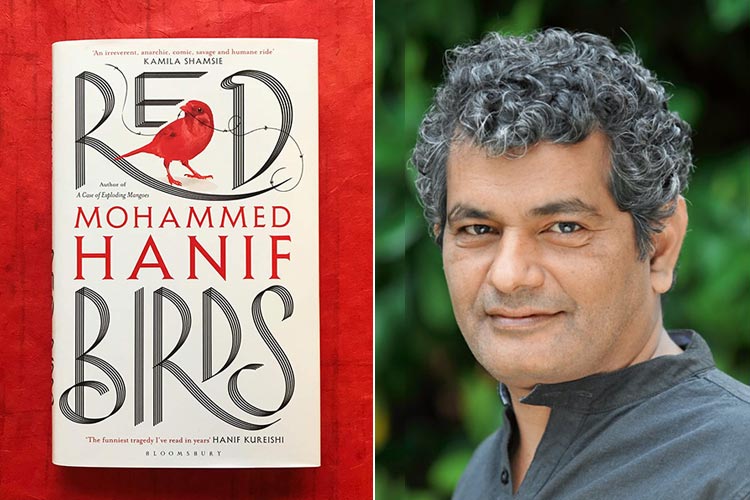
This article examines Mohammad’s Hanif’s novel Red Bird (2018) using a multidimensional theoretical framework that synthesises eco-anxiety, trauma and existential void. It contends that the main characters of the novel experience eco-anxiety and psychological trauma at the same time. These simultaneous but distinct psychological issues are caused and intensified by the war, which badly affects the human as well as non-human life in the narrative. Terror and ecological disaster are so overwhelming that the characters are left in a void. This void is an existential crisis that mars their actions and choices, and they are unable to regain their agency and freedom. This is how eco-anxiety and trauma further intersect with existential philosophy. This synthesis of three different theoretical domains is significant at various levels. First, it contributes to the field of literary research and analyses by showing that the combination of diverse lenses helps identify and explore deeper and more enriched meanings of the texts. Secondly, the interconnection of eco-anxiety, psychological trauma and existential philosophy equally contributes to all of these combined perspectives at their individual level.
Downloads
References
Albrecht, G. (2011). Chronic environmental change: Emerging “psychoterratic” syndromes. DOI: https://doi.org/10.1007/978-1-4419-9742-5_3
In Climate change and human well-being: Global challenges and opportunities. Springer.
American Psychiatric Association. (1980). Diagnostic and statistical manual of mental
disorders (3rd ed.).
Arooba, S. M., & Saleem, M. A. (2021). Critical appraisal of the trope of wilderness in Red
Birds. Erevna: Journal of Linguistics and Literature, 5(2), 12–23. http://111.68.96.103:40003/ojserevna/index.php/erevna
Bastian, M. (2012). Fatally confused: Telling the time in the midst of ecological crisis.
Environmental Philosophy, 9(1), 23–48. https://doi.org/10.5840/envirophil2012913 DOI: https://doi.org/10.5840/envirophil2012913
Caruth, C. (1995). Trauma: Explorations in memory. The Johns Hopkins University Press. DOI: https://doi.org/10.56021/9781421413525
Caruth, C. (1996). Unclaimed experience: Trauma, narrative and history. The Johns Hopkins DOI: https://doi.org/10.1353/book.20656
University Press.
Fanon, F. (2004). The wretched of the earth (R. Philcox, Trans.). Grove Press. (Original work
published 1961)
Gifford, E., & Gifford, R. (2016). The largely unknown impact of climate change on mental
health. Bulletin of the Atomic Scientists, 72(5), 292–297. https://doi.org/10.1080/00963402.2016.1216505 DOI: https://doi.org/10.1080/00963402.2016.1216505
Grose, A. (2020). A guide to eco-anxiety: How to protect the planet and your mental health.
Watkins.
Hanif, M. (2018). Red Birds. Bloomsbury Publishing.
Mbue, I. (2021). How Beautiful We Were. Random House.
McCandless, D. (1993). Beckett and Tillich: Courage and existence in Waiting for Godot. In
L. Butler (Ed.), Critical essays on Beckett. Scholar Press.
Oramus, D. (2022). Prophesying the end of human time: Eco-anxiety and regress in J. G.
Ballard’s short fiction. Text Matters, 12. https://doi.org/10.18778/2083-2931.12.10 DOI: https://doi.org/10.18778/2083-2931.12.10
Owens, D. (2018). Why the crawdads sing. G. P. Putnam’s Sons.
Saadia, R. (2023). Representation of war trauma in Hanif’s Red Birds. Journal of Languages,
Culture and Civilization, 5(1), 63–70. https://doi.org/10.47067/jlcc.v5i1.163 DOI: https://doi.org/10.47067/jlcc.v5i1.163
Said, E. W. (1979). Orientalism. Vintage.
Sartika, E. (2020). Traumatic experiences in Eka Kurniawan’s novel Seperti dendam, rindu DOI: https://doi.org/10.22146/poetika.v8i2.55895
harus dibayar tuntas. Poetika: Jurnal Ilmu Sastra, 8(2), 121–138.
https://doi.org/10.22146/poetika.55895
Shoukat, L., et al. (2021). An analysis of personal and collective trauma in Khaled Hosseini’s
novel Sea Prayer. Journal of English Education, 6(2), 117–130.
https://doi.org/10.30606/jee.v6i2.457 DOI: https://doi.org/10.30606/jee.v6i2.457
Tillich, P. (1959). The courage to be. Yale University Press.
Waheed, M. (2014). The book of gold leaves. Penguin.
Downloads
Published
Issue
Section
License
Copyright (c) 2026 Muhammad Qasim, Dr. Yasir Arafat (Author)

This work is licensed under a Creative Commons Attribution 4.0 International License.
Authors retain the copyright and full publishing rights of their work. All articles published in Scholar Insight Journal are licensed under the Creative Commons Attribution 4.0 International License (CC BY 4.0).
Under this license, readers are permitted to read, download, copy, distribute, print, search, link to the full texts, and reuse the published articles for any lawful purpose, including adaptation and commercial use, provided that appropriate credit is given to the original author(s), the source of publication, and the license terms are properly acknowledged.
The journal retains the right of first publication while authors maintain ownership of their intellectual property rights without restrictions.