عصرِ حاضر کا نظامِ تعلیم اور خواتین کی تعلیم و تربیت کا مسئلہ اسلامی تعلیمات کی روشنی میں ایک تحقیقی مطالعہ
A Research Study of the Contemporary Educational System and the Issue of Women’s Education and Training in the Light of Islamic Teachings
##semicolon##
https://doi.org/10.68024/0y9p6851##semicolon##
Education##common.commaListSeparator## Muslim Societies##common.commaListSeparator## Islamic Jurisprudence##common.commaListSeparator## Educational Policy##common.commaListSeparator## Muslim Women##article.abstract##
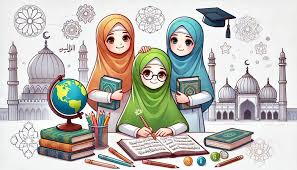
Education is central to shaping societies, and Islam places equal emphasis on the pursuit of knowledge for both men and women. In Muslim societies, however, the modern education system has been shaped largely by Western paradigms, creating a disconnect between contemporary practices and Islamic values. This research critically examines the challenges of women’s education and character formation within this context, while proposing solutions grounded in Islamic teachings. The study explores the historical development of the modern education system and evaluates its compatibility with the Islamic worldview. It highlights the structural and moral challenges faced by Muslim women—such as curriculum content, institutional culture, and the lack of integration between academic learning and spiritual training. Drawing upon the Qur’an, Hadith, classical jurisprudence, and contemporary scholarship, the research emphasizes Islam’s vision of women’s education as both a right and a pillar of social reform. Using qualitative analysis of Islamic sources, literature, and policy documents (with a focus on Pakistan), the study proposes a holistic educational model that combines academic excellence with moral and spiritual development.
##plugins.themes.default.displayStats.downloads##
##submission.citations##
1. Iqbal, M. (1998). Ta‘lim-e-Niswan aur nai nasal [Women’s education and the new generation]. In Maqalat-e-Iqbal (p. 124). Iqbal Academy Pakistan.
2. Al-Qaradawi, Y. (2005). Islam mein aurat ka maqam o martabah [The status and position of women in Islam] (M. I. Kailani, Trans.; pp. 134–140). Al-Maktabah al-Ta‘awuniyyah lil-Da‘wah wal-Irshad.
3. Hamidullah, M. (2008). Khutbat-e-Bahawalpur [Bahawalpur lectures] (p. 121). Idarah-e-Islamiyat.
4. Rahman, R., Asadi, F., Ghory, R., Popalzay, S., & Quraishi, T. (2025). The impact of modern technologies on women’s empowerment: A case study of online university. Journal of Electrical and Computer Experiences, 3(1), 1–10.
5. Ghazi, M. A. (2010). Khutbat-e-Islam [Lectures on Islam] (p. 151). Idarah Ma‘arif-e-Islami.
6. Khan, W. D. (2012). Aurat: Aik mutala‘ah [Woman: A study] (p. 76). Idarah-e-Islamiyat.
7. Ahmad, I. (2005). Khawateen ki taleem o tarbiyat: Islami tanazur mein [Women’s education and training in an Islamic perspective] (p. 56). Markaz-e-Tahqiq-o-Afkar-e-Islami.
8. Nadvi, S. S. (1998). Khawateen-e-Islam [Women of Islam] (p. 113). Maktabah Rahmaniyyah.
9. The Qur’an. (n.d.). Surah Al-‘Alaq (96:1).
10. The Qur’an. (n.d.). Surah Az-Zumar (39:8).
11. The Qur’an. (n.d.). Surah Fatir (35:28).
12. Al-Tirmidhi. (n.d.). Sunan al-Tirmidhi, Kitab al-‘Ilm, Hadith No. 2646.
13. Qadri, M. T. (2011). Islami nizam-e-tarbiyat [Islamic system of education and training] (p. 45). Minhaj-ul-Quran Publications.
14. Ahmad, K. (1996). Islami taleem aur tarbiyat [Islamic education and training] (p. 89). Islamic Research Academy.
15. Haq, A. (2014). Khawateen ki taleem: Islami nuqtah-e-nazar se [Women’s education from an Islamic perspective] (p. 18). Bazm-e-Iqbal.
16. Al-Faruqi, I. R. (1982). Islamization of knowledge. International Institute of Islamic Thought.
17. Mernissi, F. (2011). Beyond the veil: Male–female dynamics in modern Muslim society. Saqi Books. (Original work published 1975)
18. Hussain, R. (2005). Women education in Pakistan: Problems and prospects. Institute of Policy Studies.
19. Human Rights Watch. (2022). Barriers to education for girls in Muslim-majority countries. Human Rights Watch.
##submission.downloads##
##submissions.published##
##issue.issue##
##section.section##
##submission.license##
##submission.copyrightStatement##
##submission.license.cc.by4.footer##Authors retain the copyright and full publishing rights of their work. All articles published in Scholar Insight Journal are licensed under the Creative Commons Attribution 4.0 International License (CC BY 4.0).
Under this license, readers are permitted to read, download, copy, distribute, print, search, link to the full texts, and reuse the published articles for any lawful purpose, including adaptation and commercial use, provided that appropriate credit is given to the original author(s), the source of publication, and the license terms are properly acknowledged.
The journal retains the right of first publication while authors maintain ownership of their intellectual property rights without restrictions.