
Contemporary Consciousness of Akbar Alahabadi
##semicolon##
https://doi.org/10.68024/1atjbz76##semicolon##
Akbar Alahabadi##common.commaListSeparator## Contemporary Consciousness##common.commaListSeparator## Muslim Identity##common.commaListSeparator## Western Civilization##common.commaListSeparator## Satire##common.commaListSeparator## Islamic Thought##common.commaListSeparator## Social Criticism##article.abstract##
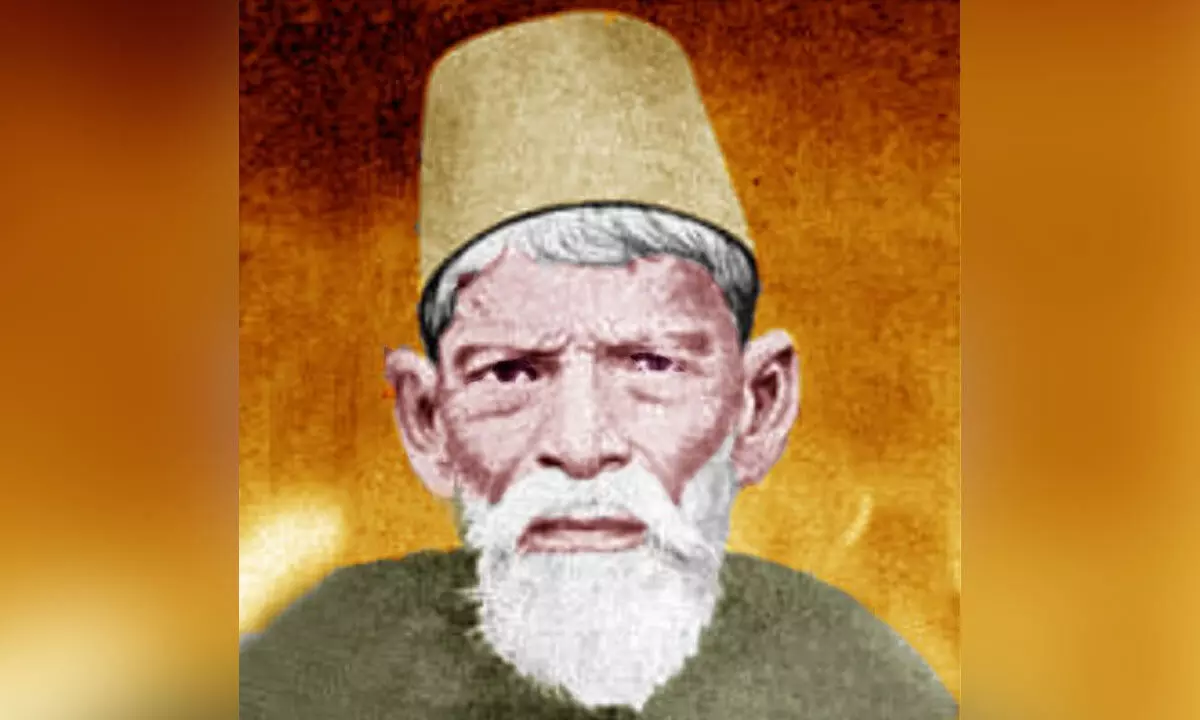
Akbar Alahabadi holds a distinguished place among the major classical poets and intellectual figures of the Subcontinent due to the depth, insight, and critical awareness reflected in his poetry. He was not merely a satirist who employed humor for entertainment; rather, he was a perceptive thinker who closely examined the realities of his age. His poetic vision encompasses a wide range of concerns, including political domination, social transformation, cultural dislocation, educational trends, economic pressures, and moral as well as religious decline.During the colonial period, a large segment of Indian Muslim society began to adopt Western lifestyles, values, and educational models uncritically. This tendency, in Akbar Alahabadi’s view, threatened Islamic identity, ethical stability, and indigenous cultural traditions. Through sharp satire and subtle irony, he challenged this blind imitation and exposed the internal contradictions and moral shortcomings of Western civilization. At the same time, he emphasized that Islam provides a holistic and balanced framework capable of addressing human needs in all spheres of life.Akbar Alahabadi’s poetry reveals social hypocrisy, moral erosion, intellectual confusion, and cultural alienation within Muslim society, presenting these issues in a manner that provokes reflection rather than mere ridicule. His satirical style serves a reformative purpose, aiming to protect moral values, discourage vulgarity, and resist cultural domination. Moreover, he offers thoughtful and practical perspectives on social, educational, psychological, and economic problems, which enhance the lasting relevance of his work. Consequently, his poetry stands as a strong expression of contemporary consciousness and an intellectual resistance to cultural and ideological subjugation.
##plugins.themes.default.displayStats.downloads##
##submission.citations##
Akbar Allahabadi. (1998). Kulliyāt-e-Akbar (S. Narang, Ed.). Media International.
Barelvi, I. (1983). Urdu shāʿirī. Educational Book House.
Hasan, N. (Ed.). (1964). Akbar Allahabadi aur un kā kalām. Maktaba Shahrah.
Hasan, S. (Ed.). (n.d.). Ashʿār-e-Iqbal. Kitab Manzil.
Khan, S. A. (2010). Qaumi aur milli shāʿirī. In Tārīkh-e-adabiyāt-e-Musalmānān-e-Pākistān wa Hind (Vol. 4). University of the Punjab.
IRAK. (n.d.). Education and Akbar Allahabadi. http://irak.pk/education-and-akbar-allahabadi/
##submission.downloads##
##submissions.published##
##issue.issue##
##section.section##
##submission.license##
##submission.copyrightStatement##
##submission.license.cc.by4.footer##Authors retain the copyright and full publishing rights of their work. All articles published in Scholar Insight Journal are licensed under the Creative Commons Attribution 4.0 International License (CC BY 4.0).
Under this license, readers are permitted to read, download, copy, distribute, print, search, link to the full texts, and reuse the published articles for any lawful purpose, including adaptation and commercial use, provided that appropriate credit is given to the original author(s), the source of publication, and the license terms are properly acknowledged.
The journal retains the right of first publication while authors maintain ownership of their intellectual property rights without restrictions.