
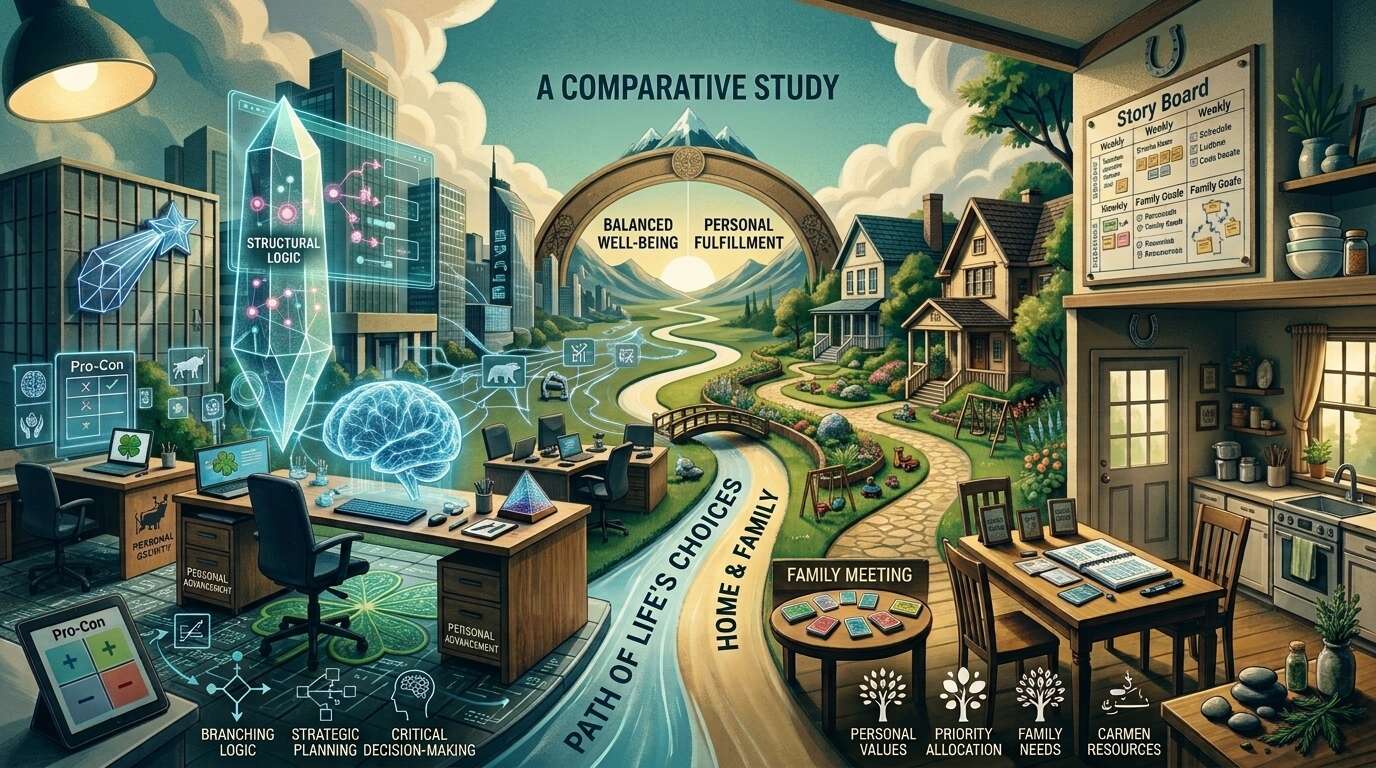
The Influence of Superstitious Beliefs On Decision Making Among Housewives and Working Women: A Comparative Study
##semicolon##
https://doi.org/10.68024/h07ag720##semicolon##
superstitious beliefs##common.commaListSeparator## decision-making styles##common.commaListSeparator## housewives##common.commaListSeparator## working women##common.commaListSeparator## Pakistan##article.abstract##
Superstitious beliefs remain prevalent across cultures despite being fundamentally incompatible with scientific reasoning, yet their relationship with decision-making styles remains underexplored in South Asian contexts. This study examined the influence of superstitious beliefs on decision-making styles among housewives and working women in Pakistan. A sample of 250 women (125 housewives, 125 working women) completed the Superstitious Beliefs Scale (SBS) and the General Decision-Making Style (GDMS) inventory. Pearson correlations, hierarchical regression, and MANOVA were employed to analyze the data. Results revealed that superstitious beliefs were significantly positively correlated with avoidant (r = .34, p < .01), dependent (r = .28, p < .01), and intuitive (r = .19, p < .01) decision-making styles, while showing a significant negative correlation with rational style (r = -.25, p < .01). Hierarchical regression confirmed that superstitious beliefs significantly predicted avoidant decision-making (β = .32, p < .001) even after controlling for age and education. MANOVA found that there were significant differences between groups (Wilks Λ =.824, p =.001), with the housewives scoring higher on superstitious beliefs, social superstitious behavior, belief in bad luck, dependent style, and avoidant style, and working women scored higher on the rational style. The results discuss the significance of occupational roles in influencing cognitive processes and the importance of culturally sensitive interventions to support rational decision-making in Pakistani women.
##plugins.themes.default.displayStats.downloads##
##submission.citations##
Aftab, S., & Shakir, W. (2024). Locus of control, superstitious beliefs and decision-making styles among housewives. http://111.68.99.22:8080/xmlui/handle/123456789/18883
Arad, A. (2014). Avoiding greedy behavior in situations of uncertainty: The role of magical thinking. Journal of Behavioral and Experimental Economics, 53, 1–7. https://doi.org/10.1016/j.socec.2014.07.003
Blanco, F., Moreno-Fernández, M., & Matute, H. (2026). Thinking fast and biased: Intuitive thinking style is associated with the illusion of causality. Consciousness and Cognition, 141, Article 103876. https://doi.org/10.1016/j.concog.2025.103876
Bukhari, S. S., Pardhan, A., Khan, A. S., Ahmed, A., Choudry, F. J., Pardhan, K., Nayeem, K., & Khan, M. (2002). Superstitions regarding health problems in different ethnic groups in Karachi. Journal of the Pakistan Medical Association, 52(8), 383–387.
Chukkali, S., & Dey, A. M. (2020). Development and validation of Superstitious Beliefs Scale. Rupkatha Journal on Interdisciplinary Studies in Humanities, 12(1). https://doi.org/10.21659/rupkatha.v12n1.32
Cohen, J. (1988). Statistical power analysis for the behavioral sciences (2nd ed.). Lawrence Erlbaum Associates.
Damisch, L. (2008). On the adaptive value of superstition [Doctoral dissertation, University of Cologne]. KUPS.
Dey, A. M., & Chukkali, S. (2020). Development and validation of superstitious beliefs scale. Rupkatha Journal on Interdisciplinary Studies in Humanities, 12(1). https://doi.org/10.21659/rupkatha.v12n1.32
Dong, P., & Labroo, A. A. (2018). Expectancy neglect: Why superstitious acts increase risk seeking in gains but risk avoidance in losses. Journal of the Association for Consumer Research, 3(4), 527–539. https://doi.org/10.1086/698494
Egorov, I. V. (2025). The influence of superstition and belief in the supernatural on economic decision-making. Review of Pedagogical Research, 7(5), 103–108. https://journals.rcsi.science/2687-0428/article/view/376749
Farooq, A., & Kayani, A. K. (2012). Prevalence of superstitions and other supernaturals in rural Punjab: A sociological perspective. South Asian Studies, 27(2), 335–344. https://sasj.pu.edu.pk/9/article/view/729/729
Fletcher, J. M., Marks, A. D. G., & Hine, D. W. (2011). Working memory capacity and cognitive styles in decision-making. Personality and Individual Differences, 50(8), 1136–1141. https://doi.org/10.1016/j.paid.2011.02.002
George, D., & Mallery, P. (2010). SPSS for Windows step by step: A simple guide and reference, 17.0 update (10th ed.). Allyn & Bacon.
Gomes-Ng, S., Cowie, S., & Elliffe, D. (2025). When is a causal illusion an illusion? Separating discriminability and bias in human contingency judgements. Quarterly Journal of Experimental Psychology. Advance online publication. https://doi.org/10.1177/17470218241293418
Jabbar, A., Sadaqat, S., Baloch, M. A., Hassan, S., Siyam, M. Q. u., Siddique, F., Kaniz, O., Ahmad, T., & Saeed, F. (2025). Phenomenological study of superstitious beliefs and mental well-being among pregnant women. Insights-Journal of Health and Rehabilitation. https://api.semanticscholar.org/CorpusID:278811229
Kahneman, D. (2011). Thinking, fast and slow. Farrar, Straus and Giroux.
Malik, R., Akhtar, S., & Mughal, F. A. R. (2024). Relationship between locus of control, paranormal beliefs, and magical ideation among young adults of Pakistan. Journal of Rawalpindi Medical College, 28(4), 557–562.
Malik, R., & Javed, N. (2021). Religiosity and superstitious beliefs among women in Punjab. Journal of Research Society of Pakistan, 58(3), 292–295.
Maqsood, A., Jamil, F., & Khalid, R. (2018). Thinking styles and belief in superstitions: Moderating role of gender in young adults. Pakistan Journal of Psychological Research, 33(2), 335–348. https://pjpr.scione.com/newfiles/pjpr.scione.com/155/155-PJPR_1.pdf
Mitchell, L. G. (1983). Changing patterns in consumer behavior engendered by the changing status of women (ERIC Document No. ED231726). Paper presented at the Southwestern Social Science Annual Meeting, Houston, TX, United States.
Nunnally, J. C. (1978). Psychometric theory (2nd ed.). McGraw-Hill.
Qaddos, M. (2023). Socio-religious norms of Pakistan: Understanding the emotional labour and the dilemma of stay-at-home women. In IGI Global. https://www.igi-global.com/viewtitlesample.aspx?id=326267
Qasim, A., Riaz, I., & Nihal, T. (2025). An exploratory analysis of beliefs in superstitious among the people of Multan and Ghotki. Statistics, Computing and Interdisciplinary Research.
Risen, J. L., & Gilovich, T. (2008). Why people are reluctant to tempt fate. Journal of Personality and Social Psychology, 95(2), 293–307. https://doi.org/10.1037/0022-3514.95.2.293
Rotter, J. B. (1966). Generalized expectancies for internal versus external control of reinforcement. Psychological Monographs: General and Applied, 80(1), 1–28. https://doi.org/10.1037/h0092976
Sagone, E., & De Caroli, M. E. (2014). Locus of control and beliefs about superstition and luck in adolescents: What's their relationship? Procedia - Social and Behavioral Sciences, 140, 318–323. https://doi.org/10.1016/j.sbspro.2014.04.427
Scott, S. G., & Bruce, R. A. (1995). Decision-making style: The development and assessment of a new measure. Educational and Psychological Measurement, 55(5), 818–831. https://doi.org/10.1177/0013164495055005017
Spicer, D. P., & Sadler‐Smith, E. (2005). An examination of the general decision making style questionnaire in two UK samples. Journal of Managerial Psychology, 20(2), 137–149. https://doi.org/10.1108/02683940510579777
Subbotsky, E. (2024). Magical thinking and magical experience as dimensions of living consciousness. In The magic of living consciousness: The wonders of the mundane (pp. 41–54). Palgrave Macmillan.
Tahir, T. B., Fahed, S., & Safi, T. (2018). Superstitions as behavioral control in Pakistan. Pakistan Journal of Social Sciences, 38(2), 771–782.
Vyse, S. A. (2014). Believing in magic: The psychology of superstition (Updated ed.). Oxford University Press.
Wiseman, R., & Watt, C. (2004). Measuring superstitious belief: Why lucky charms matter. Personality and Individual Differences, 37(8), 1533–1541. https://doi.org/10.1016/j.paid.2004.02.009
Zigrino, A. (2025). Superstition and decision-making: How superstitious beliefs and rituals affect choices under risk [Doctoral dissertation, Sapienza University of Rome]. https://phd.uniroma1.it/web/ANNA-ZIGRINO_nT1899976_.aspx
##submission.downloads##
##submissions.published##
##issue.issue##
##section.section##
##submission.license##
##submission.copyrightStatement##
##submission.license.cc.by4.footer##Authors retain the copyright and full publishing rights of their work. All articles published in Scholar Insight Journal are licensed under the Creative Commons Attribution 4.0 International License (CC BY 4.0).
Under this license, readers are permitted to read, download, copy, distribute, print, search, link to the full texts, and reuse the published articles for any lawful purpose, including adaptation and commercial use, provided that appropriate credit is given to the original author(s), the source of publication, and the license terms are properly acknowledged.
The journal retains the right of first publication while authors maintain ownership of their intellectual property rights without restrictions.